
Op-Ed #3: Why Globalism’s Rules Are Different
From BRICS — And Why That Matters for Canada’s Future

Canada as Peacemaker Again: The Full 5-Part Op-Ed Series
Op-Ed #3: Why Globalism’s Rules Are Different
From BRICS — And Why That Matters for Canada’s Future
If you’re 55 or older and follow No More Lockdowns or Randy Hillier, you remember the Canada I grew up in — proud, independent, and never afraid to stand tall as a peacemaker. In 1956, during the Suez Crisis, we proved exactly that. We stepped between clashing giants — old colonial powers, the Soviet East, the new state of Israel, and Arab nationalism — and helped stop a phony war built on lies. We didn’t sit on the sidelines as victims. We acted.
That same spirit is needed again today.
We’ve already talked about the petro-dollar trap and how it keeps pulling us into endless Middle East conflicts. But there’s another layer most of us Boomers were never taught to see clearly: the quiet way Globalism’s institutions have tied our hands and changed who we are as nations.
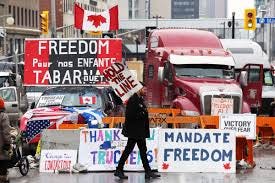
The difference between Globalism and BRICS is simple but enormous.
Globalism — through the UN, NATO, the EU, and all their treaties — is built on supranational power. Once a country signs on, the rules sit above our elected governments. EU law overrides national parliaments. UN climate accords and Sustainable Development Goals create binding obligations. NATO commitments can pull us into conflicts whether our voters like it or not. These organizations can fine countries, force policy changes, and lock in rules on energy, trade, immigration, and even what industries we’re “allowed” to build.
BRICS and the Shanghai Cooperation Organisation work the opposite way. They are voluntary clubs of sovereign nations. No central court can override Ottawa or Washington. No fines for saying “no thanks.” Decisions are by consensus — any member can walk away. Their whole point is cooperation without surrendering control. That’s why they can grow so fast while the EU and UN often tie themselves in knots.
This isn’t theory. It’s why the West has slowly strangled its own industrial strength while BRICS nations kept the old “build more, produce more” spirit alive.
Through UN climate pacts, EU Green Deals, NAFTA Free Trade deals and Davos-style ESG rules pushed through these supranational bodies, we in Canada and the United States were told to shut down coal plants, tax carbon, and steer investment away from “dirty” industries like oil, steel, and manufacturing. Germany’s factories have shrunk. Ontario and Alberta have faced endless regulatory hurdles. The message from the globalist institutions was clear: constant production is somehow bad for the planet. Hard work, thrift, and building for the future — the old Protestant work ethic that made our countries strong — was quietly rebranded as outdated or even selfish.
Meanwhile, BRICS countries never tied their hands with the same rules. They kept building factories, expanding energy production, and rewarding the simple dignity of work
.
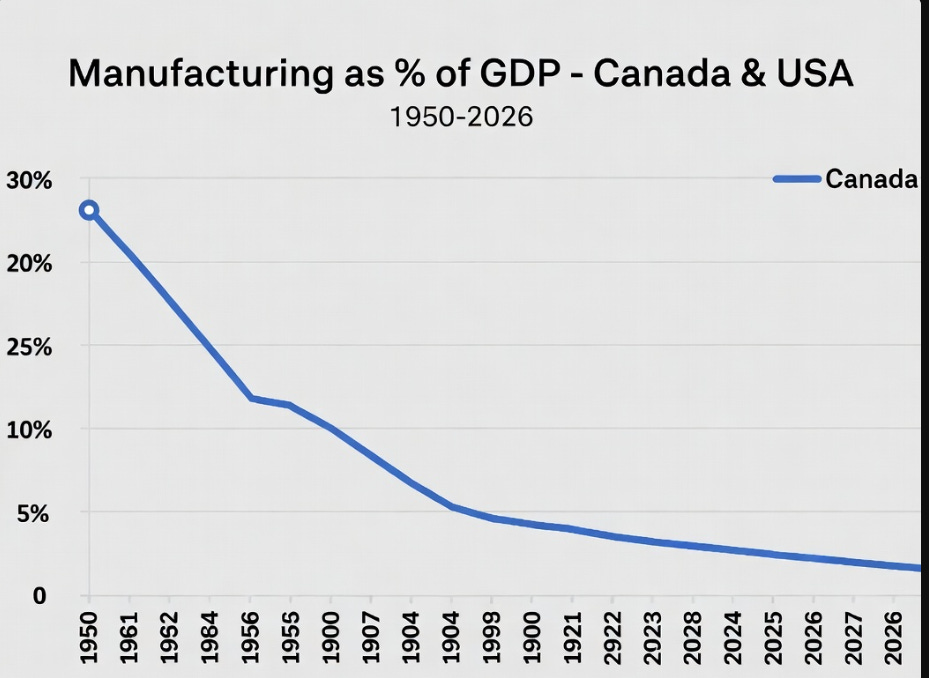
The result? Our manufacturing share of the economy collapsed from the 25% I remember as a young man to barely 10% today. We became dependent on foreign labour, foreign resources, and — as we admitted in the first piece — too often foreign graves to keep the petro-dollar system running.
The US-Israel partnership remains a paradox and moral hazard. But Globalism’s supranational straightjacket makes the whole arrangement more fragile, not stronger.
Prof. Kai-Alexander Schlevogt calls this the “exorbitant privilege trap.” Prof. Richard Werner shows how we wasted the power of credit on speculation and endless wars instead of productive industry.
Canada doesn’t have to accept this fate.
We can choose the BRICS model of sovereign cooperation over Globalism’s top-down control. We can say “yes” to productive credit for Canadian factories, “yes” to commodity-backed energy deals that reduce the need for forever wars, and “no” to Davos rules that handcuff our oil and manufacturing.
Fellow Canadians and Americans — we proved in 1956 that the world is safer when Canada stands its ground as trusted mediator. We don’t have to be victims of supranational rules or petro-dollar traps. We can lead again.
Next week I’ll show you the practical steps to tame the deep state — the permanent bureaucracy that often uses these global institutions to resist the will of the people.
The petro-dollar trap and Globalism’s binding rules don’t have to be forever. With clear eyes, steady loyalty to our allies, and good old Canadian common sense, we can break free and rebuild the strong, productive nations we remember.
It’s time we remembered who we really are.
Randy Hillier, No More Lockdowns
As long as we're being governed by the liberals, particularly with globalist Mark Carnage at the helm, we'll not get out from under the thumb of the globalist entities.
Great article! ✨
Thanks for sharing.
Yes we can go there. 🙏🏻
Need people with moral courage and values in the "right" places....
There's certainly a lack of morals in those "Snake Pits"
I'll be watching for your next op-ed 🙂